

When fireplaces were first used, they were instrumental in heating homes, at the time there was no central heating so the fireplace was the only heat source homes had to depend on. They also acted as an excellent light source at a time where electric lightbulbs hadn’t been developed. Now, with our modern homes, our radiators and our lighting systems, fireplaces are a way of adding style and luxury, creating an ambience and a welcoming environment to the home, while also increasing the value of the property.
The firepit
The very earliest fireplace was incredibly basic, it was essentially a fire pit in a carved-out space in the middle of the living room. Here, the family would gather to cook and keep warm. At the time most homes were nothing more than small huts, so the firepit was enough of a heat source to keep the home warm. These huts were built with a hole in the roof, this was to allow the smoke from the fire to escape.
The first fireplace
By 1066 the firepit had been developed into the first working fireplace. This fireplace could be inserted into an outside wall, which made it easier for homes to have fireplaces in more rooms. As two-storey homes started being built, we began to see chimneys, which were designed to direct the smoke up and away from the rooms of the house. Chimneys were invented in the middle-ages, most likely in the 11th century, and became common in homes in the 16th and 17th century.
The first stove
After the invention of the first fireplace and the accompanying chimney, fireplaces remained relatively unchanged, until the 17th century. In 1678, Prince Rupert of the Rhine invented the first fire grate, allowing air to circulate underneath the fire to make it more efficient, it was then that the fireplace began to resemble something more similar to the fireplaces we have today. Later, in 1742, Benjamin Franklin developed the fireplace to invent the cast iron stove. This was a groundbreaking invention that allowed fireplaces to provide twice as much heat, with only a quarter of the amount of fuel it has previously needed. In 1796, Count Rumford developed on Franklin’s stove further, by creating a tall, shallow firebox, which allowed smoke to escape from the fire more effectively and efficiently.
The fireplace focal point
In the 1950’s, in a post war era, countries such as the UK focused their attention on rebuilding and recovering the economy. During this time emphasis was placed on practicality and affordability, with a significant focus on functionality in the home design, comfortable living spaces were created within small time constraints. Fireplaces during this time reflected the simplicity and practicality of the era. They were built directly into the structure of post war homes, constructed from a durable brick, often with a wooden mantle to bring warmth into the room. These fireplaces became a natural focal point of the room.
Design transformations
The 1960’s was a decade of transformation both culturally and socially, this impacted upon home design massively. Moving away from the practical and functional look, homes began to be decorated with vibrant colours, eclectic furniture and bold patterns. During this time fireplaces went through their own design transformation, with free-standing fireplaces embodying the innovation and boldness of the era. These fireplaces moved away from brick and wood and were often made with steel, featuring bright colours and unusual shapes, to help them to stand out and becoming even more of a focal point in the room. While these fireplaces were still as functional as they were in the era before it, the design moved away from the conventional. In this decade, gas fires became more predominant, earlier gas models were large and bulky, but the 60’s saw the rise of smaller, compact and more efficient gas fires, in designs more fitting to the avant-garde era. Chrome and glass elements were incorporated into the design to give them a modern aesthetic.
A return to the rustic
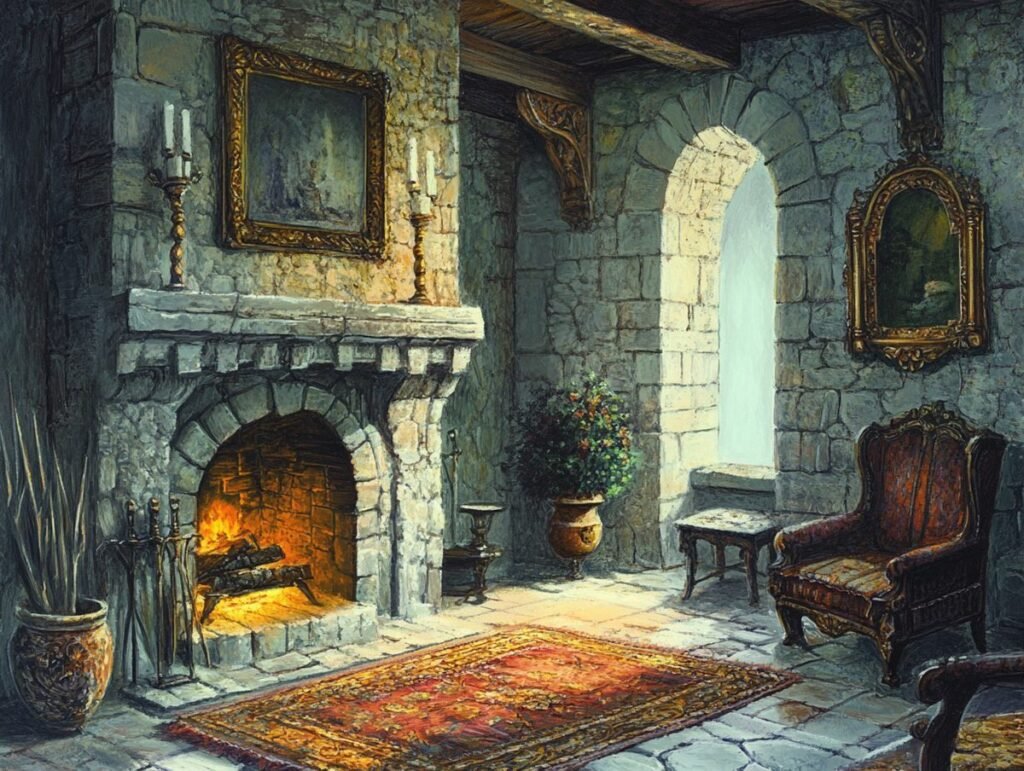
In the 1970’s we saw a return of the back-to-nature design, with stone fireplaces topped with a wooden mantlepiece on the backdrop of a large, open hearth taking centre stage and creating a communal space for the family to gather. Wood-burning stoves gained popularity during this era.
The rise of technology
The 1980’s saw massive technological advancements, which included a surge in popularity of electric fireplaces. Although electric fireplaces had been around for some time, the advanced technology of this era allowed for them to have wood-burning effects integrated into them, increasing their appeal. During this era, marble fireplaces became incredibly popular, adding luxury and making even more of a statement than any fireplace before it.
Minimalism
Minimalism was incredibly popular during the 1990’s and during this time, electric fireplaces remained the most popular choice, with a ribbon effect to create the appearance of real flames, they became even more aesthetically appealing. Gas fireplaces also began to gain in popularity as sealed gas fireplaces had been developed to enhance energy efficiency. It was also during this time that we saw the start of fireplaces being integrated into multimedia walls and home entertainment systems, combining the functionality of the fireplace with the entertainment needs of households.
Bioethanol fireplaces
The 2000’s saw a rise in modern and streamlined designs, with the emergence of bioethanol fireplaces, providing a cleaner and more eco-friendly fuel, in a more sleek and minimalistic design. During this time we saw more wall mounted bioethanol fireplaces being integrated into various rooms in the home.
Smart electric fireplaces
With remote capabilities, app-controlled fireplaces and the ability to adjust everything from heat output, to flame colour and even scheduling the fireplace, smart electric fireplaces became the highlight of the 2010’s.
Current fireplace trends
With our current focus on sustainability, bioethanol fireplaces continue to grow in popularity as an alternative to traditional wood-burning fireplaces. Gas fireplaces are continuing to evolve with advancements in burner systems, venting and heating efficiency, as well as functionality and visual appeal. Wood pellet stoves have become a more sustainable alternative to burning logs, producing less smoke and ash and allowing for a more controlled burn. While the functionalities of electric fireplaces continues to evolve, allowing to control our fireplaces when we aren’t even at home. There has never been more choice in fireplaces, fuel types, functionalities and design. Although we can’t tell you the future of fireplaces, we can say with certainty, that they will continue to evolve, as they have been doing for decades.